
Showing posts with label YA fiction. Show all posts

Wednesday, February 22, 2017

Stephanie Perkins Audio Books

Last month I listened to Anna and the French Kiss. I enjoyed it so much that I sought out more audio books by Stephanie Perkins.

Anna and the French Kiss Audiobook

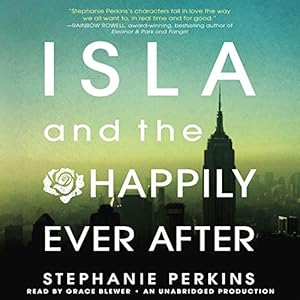
 There were a few options, but I decided to follow it up with Isla and the Happily Ever After because it featured a character I'd already met in Anna in the French Kiss. Both of these books made great, easy to listen to audio books and I highly recommend!

Image result for isla and the happily ever after by Stephanie Perkins audible

I'm going to have to get Lola and the Boy Next Door soon now...
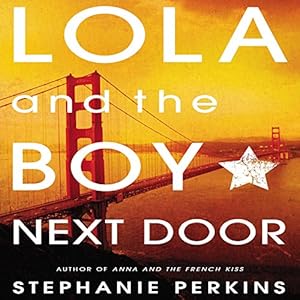
Image result for isla and the happily ever after by Stephanie Perkins audible

Saturday, October 15, 2016

Review: "A Bird, a Girl, and a Rescue" by J.A. Myhre

When a reluctant Kiisa goes off to boarding school, her father surprises her with an unlikely gift - a talking bird, a fabled "messenger" that is able to talk to humans. Kiisa and her bird Njili are destined to save lives in a dangerous rescue mission brought about by African rebels. Along the way Kiisa learns about forgiveness, bravery, and evil's role in this world. Girls overcoming cultural barriers and prejudices is also a commonly addressed theme.

A Bird, a Girl, and a Rescue is a 130-page juvenile fiction, magical realism book with a Christian underlay.
The Christian elements of the book are subtle, mostly represented through the animal messengers sharing knowledge about what evil is, and how it take many forms.

It is set in Africa, representing a fictionalized version of real events and real places. Author J.A. Myhre uses her experience living in Africa to provide an accurate representation of a culture many young readers will encounter for the first time, including using words in the Luwendigo dialect such as kodi and milembre in greetings. These words and other words that may cause confusion for young American readers (football meaning american soccer, etc.) are all defined in a short glossary at the end. Key scenes were illustrated in full-page black and white sketches, which I thought added quite a bit of value, especially for young readers tying to imagine a different part of the world.

The plot was engaging and moved at a good pace. There were odd moments in the story where time seemed to be of the essence, but the protagonist was spending time bathing, cooking chicken, and sleeping, with no sense of immediacy. The rebel antagonist story line was quite dark, but not unrealistic or necessarily inappropriate. There were subtleties that younger audiences might not pick up on, such as the protagonist wondering why the rebels would kidnap a young girl - perhaps for a cook, perhaps something "more sinister" - and thinking that if it were her in that situation, "she would be dreading nightfall" (97-98).

A Bird, a Girl, and a Rescue is the second book in the Rwendingo Tales series. The first followed Kiisa's brother and his messenger animal in A Chameleon, a Boy, and a Quest. I haven't read the first book yet, and I did not see any reason that you would need to read it first in order to appreciate this book, since though the family and setting are the same, the stories seem to be completely independent.

FTC Disclosure: I received this book for free in exchange for an honest review.


Tuesday, June 14, 2016

Can't Wait to Read: "This Is Not the End" by Jesse Jordan

"There's nothing I hate like arguments in the face of overwhelming logic. There are two reasons I know more than is possible about you. The first is simply that more is possible than you comprehend. The second is that we've been keeping track of you for a very long time, because you are a very special boy. I'm sorry--young man. A very special young man. You must excuse a certain amount of unintentional condescension from those of us who are very old. In any case, what I was beginning to say is that I've been watching you. And I've been waiting for this day, when I could finally meet you and begin." (44)

The biggest congratulations to Jesse Jordan on the release of his second novel:

Wednesday, July 30, 2014

Review: "MindWar" by Andrew Klavan

Former high school football star Rick Dial is sought out by the government for his video game skills in MindWar by Andrew Klavan, the first of the trilogy.  With four months of doing nothing but playing video games after an accident left him crippled, he became the world leader in three different games. His quick thinking and reaction time is put to the test by entering the Realm, a virtual world created by a Russian genius that intends to use it to take over American computer systems.

"My name is Rick Dial," said Rick, and he drew Mariel's blade. "And I'm here to destroy this place."
The demon's face contorted with anger, yet he managed to nod with a measure of respect. [...] "I am Reza. And I'm going to kill you." (284)


Two stories weave through the novel: that of Rick exploring the Realm and that of the Traveler, a man on the run as he assists the government with the MindWar project.  This second branch of the narrative is never fully realized, though, and his role in the project is unclear. Rick's story was interesting enough to follow, especially the dynamics with his younger brother, but the story of the Traveler was too vague and seemed to be more of an unnecessary plot addition.

The book is hokey at best, where a huge suspension of disbelief is required with every page. Becoming the best in the world at three different video games in only four months? Unlikely. The government asking for your help by drugging you and putting you in the back of a van? Exciting, but no.

Another gimmicky-tacky route this novel took was assigning each chapter a title that belongs to a video game: Call of Duty, Portal, Portal Two, Hitman.  The thing that put me over the edge was a chapter called "Words with Friends." I actually cringed.  However, one thing I should have been thankful for was the chapter breaks, since in the last section of the novel they're forgone completely.  There's about 80 pages that are only broken up by a symbol serving as an asterisk. There's 29 chapters in the first 3/4 of the book, and one for the last quarter.

The intended audience for this book is probably pre-teen boys, so perhaps these can be excused. But for an adult reader, this book left a lot to be desired. The plot was barely enough to keep my interest and all of the minor annoyances kept adding up.

FTC Disclosure: I received this book for free from BookLook for this review.  The opinion in this review is unbiased and reflects my honest judgment of the product.

Monday, May 26, 2014

Review: "One Realm Beyond" by Donita K. Paul

One Realm Beyond is the first book (and currently only book) of the Realm Walkers series by Donita K. Paul.  Once young realm walkers have learned all they can under their mentors, they are free to roam the realms looking for a dragon companion.  Cantor thought that would be an easy task compared to all of the things he would do once an official member of the Realm Walkers Guild: protecting and defending the realms.

Upon stepping through his first portal to another realm, he immediately encounters a dragon that is intent on becoming his constant companion.  Cantor is thoroughly unimpressed by the clumsy, goofy dragon and tries repeatedly to send him away.  This dragon, Bridger, may be one of my favorite dragons of all time. He's endearing, eccentric, and fiercely loyal, qualities that Cantor stubbornly ignores.

Cantor learns of the corruption in the Guild, from which his mentors had sheltered him for his entire life.  The unique characters he meets along the way join forces to attempt to bring the Guild back to the noble cause it was created to uphold.

On top of an exciting adventure, plenty of mishaps, and likeable characters, the book had an encompassing positive message. Even when facing the bad guys, it doesn't mean the heroes have to stoop to their level:
"Darling, one should always have weapons at hand [...] But sometimes a sharp tongue parries an evil intent.  A witty retort may stymie an enemy. And best of all, a kind and generous reply can take the wind out of the sails of a foe." (274)
It's also simple messages, such as looking at what's going right, instead of everything that's messed up, that make me love the message this book would give to any reader, especially teenagers.

One Realm Beyond, published by Zondervan, is a book with a Christian theme that is not over the top or out of place.  As it takes place in another world, they refer to God by another name: Primen.  Much of the characters' motivations are influenced by their loyalty to Primen and doing what is right.

As a lover of language, I appreciated that the book had nice vocabulary in it. The book is witty in introducing words that may not be so familiar to the teen audience:
"Deprived tongue?" She scoffed.  "You've a depraved mind, I'm thinking."
[...]
"The words aren't the same, Ahma. Depraved means he commits evil deeps involving blatant turpitude." (20-21)
To go a step further, the book even talks about how "vulgarities and profanity demonstrated lazy thinking" (343).  When the corrupt guild members spoke like that, the heroes recognized that it was their uneducated, evil minds that couldn't come up with words that carried real weight.

There was one odd time jump that put me off a little bit.  The chapter ends with a dragon on the roof of a building in the middle of a heavily guarded city.  It would seem as though it might be challenging for our heroes to escape the city without notice, but the next chapter begins with the characters outside the city. I guess it must've been an uneventful exit.

Other than at that one particular chapter break, I absolutely loved the book and would highly recommend it to anyone who likes young adult fantasy books, especially if they love quirky characters and a quick, fun read.


FTC Disclosure: I received this book for free from Book Look for this review.  The opinion in this review is unbiased and reflects my honest judgment of the product.

Monday, April 21, 2014

Review: "Nick and Tesla's Secret Agent Gadget Battle" by "Science Bob" Pflugfelder and Steve Hockensmith

Nick and Tesla's Secret Agent Gadget Battle by "Science Bob" Pflugfelder and Steve Hockensmith is a wonderful imaginative, inventive, and interactive children's story.


Nick and Tesla are the 11 year old children of two secret agents who are off on a mission, leaving them with their uncle, an inventor.  After the children received a message from their parents warning them about a dangerous spy, they begin investigating the stream of eccentric characters who come into their uncle's house.

As part of the investigation, Nick and Tesla invent gadgets to help them catch the spy.  These gadgets are always introduced at the end of the chapter, by one of the characters alluding to their invention:
"Someone came into our room and stole it."
"Stole your pendant? But why?"
"I'd rather know who."
 "Let's go find out, then," Nick said.  He stood and put clenched fists on his hips.  "The scientific way." (52)
On the next page, there are a set of simple, easy to understand instructions for a way to find and compare fingerprints.  Using only common household items, the experiment/invention could easily be carried out by an older child reading the book, or younger ones with adult help.


Later inventions include some less common items, which might make them difficult to create, such as a 1.5-3 volt motor and aquarium tubing.  Even if you didn't do the experiments though, I think including the instructions and illustrations would help children to get excited about science and figuring out how things work.

I really appreciated the way science was portrayed in the books.  It was honest about the trial and error process and how the inventions didn't always work out they way the children intended.  For example, the authors describe how "A long, frustrating hour passed before Tesla's idea became a reality" and "on the twentieth try" it finally worked (93).

Though it was written for pre-teens (guessing by the age of the characters), I enjoyed the mystery thoroughly, and it kept me guessing with creative twists.

FTC Disclosure: I received this book for free from Quirk Books for this review.  The opinion in this review is unbiased and reflects my honest judgment of the product.

 I am excited to read this and do the experiments with my niece when she gets older!  I have two more Nick and Tesla books to review, so look for those soon!

Wednesday, March 12, 2014

Story Shapes, Re-Inspired by "Will Grayson, Will Grayson"


“this is why we call people exes, I guess - because the paths that cross in the middle end up separating at the end. it's too easy to see an X as a cross-out. it's not, because there's no way to cross out something like that. the X is a diagram of two paths” (277).

Not only does this analogy play out for relationships, as described by the Other Will Grayson in Will Grayson, Will Grayson by John Green and David Levithan, but it also follows the path of the whole story. Two boys named Will Grayson live their lives completely independently of each other, until a chance meeting (midpoint of the two lines in the X) that ends up changing the course of both of their lives.

In my advanced fiction writing class, my professor often had us write a "craft paper" to describe the "shape" of the story we read. There is no "right" or "wrong" answer, just simply a different way of looking at and understanding the story.

For one of those assignments, I described "Zero Conditional" by Caitlin Horrocks as an "X" because of intersection plot points and their changes over the course of the short story.

A substitute teacher arrives at a classroom and has no control over the class at all. As time progresses, she gains more and more control. Her goal is obviously to make her students obey and to help them learn and her success at that is the / part of the X. The other side of the X shows the decline of the classroom pets' health overtime ( \ ). The meeting point is the death of the rat, where the students all actively participate in the burial, showing that the teacher is successful at getting them to work together. At the end of the story, a student shows that he really learned a lesson from the teacher, which is the high point of right side of the X. The low point is the murky, uncared for fish tank in the classroom. Looking at the story as an X can help the reader to notice the complete reversal of those elements of the story.

X as a story shape is helpful for illustrate different types of relationships: the relationship between two characters (Will Grayson, Will Grayson) or the relationship between elements of plot ("Zero Conditional").

Kurt Vonnegut (Cat's Cradle, Slaughterhouse-Five) said that all stories could be described in one of eight different graphs.

Monday, February 10, 2014

The Technology of "The Social Code"

Written in 2013, The Social Code by Sadie Hayes features technology as the center point of her plot. The novel features two college freshman siblings who create and market a new iPhone app. As a YA novel, this is a great plot line because of it's relevancy and freshness. The generation that will read The Social Code grew up with iPhones in their hands, so not only is something they are familiar with, but it would be a realistic sounding future for the reader as well. Aside from that, there's also the fact that writing in the most current technology almost guarantees that you are the first to write about it (or at least one of the first). These elements are just two of the reasons that technology as an integral part of the novel worked so well.


However, my question for the future of this novel: What happens when the technology becomes outdated?

My immediate thought is that it will disappear into obscurity. Once the audience has grown up, the next generation will grow up on new technology and will regard this book as irrelevant as we would reading a novel about the creation of the first computer.

That being said, that could be a great story! There's a lot to be learned from historical elements in novels, whether they were historical or current at the time of writing. In fact, a lot of literature has cultural references that are now explained by footnotes so that current audiences can fully understand and appreciate the context.

Back to The Social Code though, Hayes' use of screenshots of various media (texts, PowerPoint slides, emails, online news articles) will date the book even further. I love the element that these screenshots add, the way they can remove the reader from any narrator bias, but for a recent book, it is already starting to look dated with it's 3G iPhone and simplistic PowerPoint slides.  


What was supposed to be an important and impressive presentation made by a college student looks like something I could've whipped up in 15 minutes in high school, before making it a real presentation. With that discrepancy already outdating the book, it will be interesting to see if this book sticks around or gets lost in obscurity.